Showing posts with label students. Show all posts

Saturday, February 23, 2013

VIP: Very Important Post


This collaborative video of spoken word and visual art contains within its 7+ minutes all that we feel, all that we must remember, all that we are as students, teachers, humans. It speaks for itself.

See the project at http://tothisdayproject.com/.

Saturday, January 26, 2013

History Lessons

Sometimes learning creeps up on us, taps us on the shoulder, and slowly envelopes us. Some lessons are learned this way, like warm blankets of understanding. Then there are those that are the sledgehammers of learning: the ones that we usually recognize only just as or just after we are slammed upside the head. And some lessons we somehow have simply assimilated, not knowing the how or when, but knowing nonetheless.

This week I attended a Board of Education meeting in the small city where I live. I listened to one Board member comment on nearly every issue. That he commandeered every discussion and domineered other Board members was rough enough. What made his diatribes worse, though, were his too-frequent references to the time he's served on the Board, how things used to be done, what happened ten years ago...and all the concomitant emotions, misjudgments, and failures to recognize progress that are associated with one who uses history only to form opinions and make decisions.

The next day, driving home from school, I was still processing the experience. And from some deep recess, I realized that I knew something that that guy hadn't ever learned: despite what everyone says, starting with Edmund Burke and then George Santayana, history just may be irrelevant. Maybe it's more that history must be kept in context, as History (capitalization intended), the facts and the what-happened.

But does history have bearing on what is happening now, besides its power to inform? I don't think so. I think of raising my daughters as they entered their teen years and then headed to college. Those were the years during which I made my parents' lives pretty much hell. I was scared beyond belief that my kids would do what I did (and what I didn't). But I let them be, for the most part. Because what I knew about the possibilities and probabilities, based on my history, was balanced by, often eclipsed by, what I currently knew about them.

I approach the kids in my classroom the same way. I learn little about them, intentionally, before they get to me. I stress that every day is a new day. Misbehave on Tuesday; expect a fresh start on Wednesday (or maybe even later in the class period on Tuesday). Your brother was brilliant at grammar; I don't expect you to be, too, nor do I expect you not to be. And most definitely, what kinds of kids sat in my classroom or what happened in my classroom ten years ago is irrelevant, crazily out-of-date, not worth a mention.

It's a lesson I hope to pass on to my children, my students, my colleagues. Does that make it history?


Monday, January 21, 2013

Fits and Starts

It's been a year since I started this blog, and a month since I last posted. I suppose I shouldn't be surprised by either fact. Years seems to speed by faster as I age, and this past month has been one of both slow contemplation and frenzied task completion. And in retrospect, that is exactly how the teacher's life goes, I think.

I know I wasn't the only teacher (parent, human) who struggled with wandering thoughts of what-ifs, if-onlys, and what-would-I-dos since December 14. Once the initial despair wore off (or did it?), I was left with waves of sadness and worry and anger that ambushed me when I least expected it: driving through town to work, reading the morning news, walking to lunch, teaching a grammar lesson, composing an email, checking Facebook, waiting for sleep in the dark hours. I thought of the Newtown kids, the Newtown teachers and staff, the Newtown families, those who lost, those who lived, then: my kids, my colleagues, my families. I am willing to bet I will remember best the faces of the students who sit in my golden chairs this year more than any other; they are with me in every waking - and dreaming - moment.

And to some extent, these thoughts sort of paralyzed me. I couldn't think of what to write here. I didn't want to bustle about my house, sprucing up or cleaning up. I didn't connect with friends far away to chat about life and love. I didn't work out. I simply focused on what was most important for me, at that time - being at work and working.

And so, the month became filled with vocabulary and grammar and writing and literature, with essays and quizzes and reader responses, with writing lab and extra help and email conversations and video conferences. My accordion folders of correcting filled up, emptied, and filled up again. I carried them to and from work in my pretty new school bag, which got heavier and lighter and heavier and lighter.

Now, it's time to reclaim the balance. This will be slow work, I know. But I've made some calls, I'm back on the NordicTrack, and I'm interested in writing again. Of course, the work is important, but so am I. I can only be as good for my students and my school as I am to myself, and I don't want to be simply good. I want to be better.

Saturday, December 15, 2012

Too Close, in Too Many Ways

Disclaimer: This post is a selfish attempt at a balm for my spirit.

This morning, I don't want to turn on the television. But I know I will.  I don't want to read or hear the debates around gun control. But I know I will. I don't want to read or hear the laments about the lack of adequate mental health care in this country. But I know I will. I don't want to see the word "loner" or the label "Asperger's Syndrome" attached to this horrific event. But I know I will. And I most definitely don't even want to think about the children and our colleagues and their friends and families in Newtown, Connecticut, which is only minutes away from both where I grew up and where I live now. But I most definitely know I will, over and over and over.

But I will also focus on the sanctity and the safety, both literal and figurative, of the schools to which we send our kids, in which we work. We strive, daily, to make our classrooms and playgrounds and cafeterias and gymnasiums sacred places for our students. We do this in both obvious and subtle ways, and we do it out of pure love and devotion. And when what we create is shattered, we are shattered, too. 

Parents wonder how they can put their kids on buses on Monday and worry about their own schools' safety. In one moment, educators wonder if we'll return home from work on any given day. In another moment, we begin planning how to best support our kids (and their parents) who will have both worried and worrisome questions. In the next, we wonder what more we can do to prevent things like this from happening. We worry about ourselves and our students, and we feel deeply. The loss of twenty children and seven adults (and a very troubled young man who once sat in our classrooms) is a heavy enough grief for this country to bear, and we teachers add to its weight with our feelings of concern, responsibility, and yes, inadequacy. The "how can this happen" question is close to the bone for those of us in education. 

And yet, we will return to our schools and to our work. We will gather each other and our students in our arms and in our hearts and we will march forward together. We must, for to do otherwise would be a surrender to our fears and an abandonment of our ideals. 

For Twenty Eight

The moon
on this 
senseless night
is a slender cradle
for your light
and I'm afraid
the bough
has broken.

But we will 
catch you
- all of you -
in our arms
and hold you
until we are
never full
again.

Sunday, November 11, 2012

Word Choice

Besides the usual swears, the words "pig" (as in "you're a pig") and "hate" (as in "I hate you") were considered profanity by my parents (who, by the way, swore - one frequently, the other only occasionally, thereby producing in me a swearer, too). Of course, I'm talking about nearly fifty years ago, when somehow we were collectively more proper and less culturally sensitive all at the same time. Between now and then, our society has become more word-aware, and while some deride the term "political correctness," I believe in it as movement toward thoughtfulness, compassion, and ultimately, equality. I raised my own children to abhor and refrain from using "retarded" and "gay" to signify anything but their literal meanings, and I do not tolerate anyone else (read: students, colleagues, friends) misusing them, either. 

As teachers, our awareness exceeds words like the aforementioned, though. We pick and choose our words in every moment of our professional lives, especially with two specific groups: students and parents. With students, we know our words can help, hurt, mislead, misinform, sway, or encourage. Whether we're complimenting a student on her work or criticizing another's, we must always be thoughtful. With parents, this thoughtfulness is just as, if not more, important. 

We get a student for a year, maybe, if looping is still done, two. Parents have had that child for six, ten,   fifteen years. Seems obvious, but sometimes we talk as if we know a child better than his parents do. I recently advised a colleague who was struggling with some parents that, like customers, parents are always right. They are, and it behooves us to think in this mindset as we work with them. Do we see things the parent might not? Yes. Are we aware of issues that a parent might be ignoring or denying? Of course. Are we experts in our field who can offer strategies and solutions that parents don't know about? Certainly. But conveying all that we know and believe is a game, just as any kind of communication is a game. And our tactics for winning the game must be thoughtfulness and proper word choice. Our words must always reflect our genuine concern; they must be authentic, supportive, and clear. 

Every so often, a list of "Report Card Comments We Wish We Could Use" or some kind of Teacher Jokes list makes the rounds. In the laughs and pointed comments of some teachers we can see real resentment. Some of us simply chuckle. I wish we all found the material offensive, though, because it is. My colleagues might argue that these jokes are a way to ease frustration and to commiserate. Perhaps. But they're still at the expense of our students and parents. And since they're not anything we'd share with either of those groups, I'd suggest that they're not jokes at all.  

Some will call me overly sensitive or politically correct. I'll take either as a compliment, literally

Saturday, November 3, 2012

A Page from Chip Kelly's Playbook

Watching the Oregon - USC game tonight, I couldn't help but draw some analogies between Coach Chip Kelly's novel approach to the game and what we do as teachers every day.

How many plays do this guy, his staff, and his team employ? Lots. Lots and lots. Kelly tries everything to move the ball, to make the next down, to win a ballgame. We do the same as we alter lesson plans, improve our methodology, increase our use of technology, engage our parents in more and different ways, and employ interventions that assist our students, all in the name of achievement of goals, of student success.

Want to see exciting football? Watch the up-tempo pace of the Ducks; marvel at their no-huddle offense  and see the speed with which they move the ball upfield. And upfield and upfield and into the endzone.   Likewise, we must find new and exciting ways to draw our students in. Old-school doesn't cut it anymore. To keep them engaged, we must be engaged, too, in the ways in which they are learning. Soon enough, we will all be paperless and textbookless. All of our classrooms will be flipped. We need to release our fears of the new and different and embrace the opportunities for these new ways to learn. To refuse to do so is to welcome a swift defeat.

And in Chip Kelly we find a coach who's got it right when it comes to mistakes, too. His "Next Play" philosophy allows his players to not necessarily ignore their missteps, but rather to move beyond them to the next play, the better play, the winning play. And that's exactly what we do with our kids, every period, every day, every week. We offer them ways to recover from their mistakes and to find real success, for it is in the knowing and growing that real success occurs. When we do this part right - no grudges, no expectations of failure, no pre-conceived notions - kids know they have the opportunity to get it right, too.

Chip Kelly and his Ducks are changing the game. Education is changing, too. Let's make it just as much fun to watch as Oregon football.


Why We Do

It's always encouraging to be reminded of how much the work we do matters, and it's even more exciting when those reminders are surprises, or at the very least, unexpected. It's interesting, too, to consider why we teachers don't expect all those positive outcomes from our work with our students and their parents and our colleagues.  Have we gotten that far away from conceptual success that when it happens, really and truly, we are stunned? I'd like to think it's because part of our natures as professionals to know we're doing it right, to worry that it might not make a difference, and to be humble in the discovery that, indeed, it has.

I've been on a run lately. A lucky, meaningful, bring-tears-to-my-eyes run. Parents praise me for my communication initiatives. An administrator shares with me another parent's positive comments, but precedes the sharing of that information with her own appreciation for my insight and support that is somehow making her job "worth it." A union colleague thanks me for always responding to his questions and for my "years of advocacy." Yesterday, a former student, now a dear friend, visits from far away and tells me that if it hadn't been for me, he wouldn't be who he is. Mind you, I deny this. I say, "I only showed you the door, maybe held it open." He replies, "No, you pulled me through it. You were consistent when my parents weren't. You helped me with my college applications. You loved me no matter what. You made me." Okay, I did help him a lot, and I still would do practically anything for this late-20's kid, but really? I'm responsible for his awesomeness? No way!

I know he would read that and say, "Way!!" But still, I cannot help but think that it was simply my job to hold the mirror up for this kid so that he could see his progress, his passion, and his potential. For this one, and for all the others, too. We don't do it for moments like last night's. In fact, we really can't see them happening five, ten, fifteen, twenty years before they do. There's no anticipation, just crossed fingers, I suppose. Perhaps that's what makes the realization so deep and rich. We wanted it, we hoped for it, but we released it, too, somewhere along the way. And then, there it is again: hope realized, in the form of a man whom I am proud to call my friend, in another former student's Saturday morning text that says, "I owe you a lot of praise for inspiring me to teach," and in every child in our classrooms, year in and year out, whether we - or they - recognize it yet or not.

And while that's probably not why we chose teaching, it just may be why we continue teaching.

Saturday, October 27, 2012

The Best Policy

Exhibit A 

Student fails to submit essay by deadline. When corrected essays are returned, student says, "I didn't get mine back." Teacher replies, "That's because I never received it."
Student: "But I sent it to your email." 
Teacher: "Perhaps you misspelled the address. What's the earliest time at which you can forward me your original email with the attachment?" 
Student: "2:30."
Teacher: "I will give you until 3:00. But remember, in order to receive credit, you must forward me your original email with timestamp." 
Two days pass. Student sends email with essay attached. It's not a forward. Student expects credit (and must assume teacher is a moron).

Exhibit B 

Student meets with teachers and parent after school to discuss academic difficulties. As the team is determining if student struggles with organization and time management, teacher asks student, "Do you use your planner?" 
Student: "Well, I use it one or two days a week for one or two assignments."
Teacher: "So as you were telling us this, what were you thinking about?"
(Teachers and parent expect answer something like "That I need to use my planner all the time.")
Student: "That I wasn't telling the truth."
Group stifles a collective laugh. Student removes glasses and wipes eyes. Teacher thanks student for having integrity. 

While we'd all probably prefer to work with students like the latter, more of them fit the description of the former. But both provide us with moments to teach and to learn. Both offer lessons in veracity and in caring. And we gotta love 'em both. 

Sunday, September 23, 2012

The Importance of Parents

Parents are getting a lot of play in recent news and current sentiment around education reform. More and more, the parents' role in their children's educations is being debated, lamented, or suggested. Not so much praised, though. There isn't much celebration of parental involvement, and that's probably because there's so little of the right kind, and too much of the wrong kind.

A few years ago, growing media criticism of helicopter parents turned a bright spotlight on those parents whose extraordinarily protective and preventative behaviors, experts and laypeople alike thought, were detrimental to kids. For forever, teachers have worried about the other kids, too: those whose parents, let's say, are stealth drones. We don't see them. We don't hear from them. They're invisible. And while the helicopters are over-involved and over-participatory while over-doing it, the stealth drones are there, we know, but absent, and can be just as dangerous. I couldn't pick either as better than the other. Neither is any good.

This is true, too, for another type of parent. Let's call them the bombers. The one who, years ago, upon seeing my Halloween costume (I was dressed as a student who sported a rather unique style: tank-top, overalls, fleece vest, hair in a ponytail on top of her head, chewed up pen cap in mouth), told me that I "did [his daughter] better than she did." Or the one who sneered at parent conferences that I would soon see how less interesting this one was than his other brothers, whom I'd also had as students. Or the one who accosted a colleague in the grocery to complain about her child's poor academic performance, his choice of after-school sport, and even, his weight. These parents worry us just as much...maybe even more. Hovering is bad. Disengaging is bad. But I firmly believe that dogging your child is really, really bad.

Maybe that's because of our roles in these parenting scenarios. With helicopters, we are often on the receiving end of criticism. We defend ourselves, our practices, our colleagues. With stealth drones, when our attempts at engagement are rebuffed, we either redouble our efforts or eventually submit to a sad truth we know all too frequently. But with bombers, we get our backs up on behalf of our students. We counter the bomber's accusations with our advocacy. We defend those defenseless kids. We praise, we support, we suggest, we praise some more.

We believe in the power and potential of every one of our students, every day. We want our students' parents to feel the same way. Our kids deserve that, from all of us.

Sunday, September 16, 2012

It's Never About the Money

Two recent events, one national news (the Chicago teachers' strike) and one a local issue, have got me thinking about money. Besides my normal personal financial worries, I don't usually think about money on a professional level. In some ways, because I believe in fairness, parity, and solidarity, I've felt rather forced into thinking about salaries and benefits and other moneyish things these past few weeks. And I am both bothered and sad.

That's because, in this profession (in nearly every profession, right?), we're not in it for the money. We don't stay in it for the money. Some of us leave it under the pretense of (lack of) money, but most of us are here despite the money. Granted, I work in the state with the highest teachers' average salaries. Still, those salaries don't come close to matching the salaries or potential salaries for other professions with similar degree requirements. So when education critics complain about our high salaries, or when the focus of a walkout turns to what Chicago teachers make, or when anyone questions the teachers' (or in my case, my local union's) motives for demanding a fair deal, two things happen to me: I get my back up, and I get down.

The best way to combat these feelings (for I can only control how I feel; I certainly cannot control anyone else's emotions) is to make a list of why we are here, and what does motivate us:

  • The kids. The ones who struggle and the ones who soar. The ones with the newest technological devices and the ones who come to school in too-tight sneaks and dirty hair. The ones who pay close attention, the ones who can't pay attention, and the ones who refuse to pay attention.  The ones who appreciate us now, and the ones who will only appreciate us later. The athletes, the artists, the talkers, the thinkers. Those on the edges and those firmly grounded in the center. Those with baggage and those who think baggage is what you take on a vacation to Cancun. First, foremost, and always, it's about the kids. 
  • The collegiality. Our work wouldn't be nearly as meaningful if we didn't, or couldn't, share it with our peers. We, veterans and rookies, learn from each other about classroom management, websites and apps, supplemental texts and new studies, and the kids. Again, and again, it's about the kids.
  • The discipline. Not discipline as in self- or how-to, but the subject area that intrigues us and powers our own interests and ambition. Scientists in the lab. Language Arts teachers reading. PE teachers moving in new ways. Library Media Specialists researching. Social workers guiding families to success. And the great thing about our jobs is that we get to do all this, share all this for, with, and because of, the kids. There they are again. Even our chosen areas of study, in the end it's about the kids.
Many of us started our paths to teaching long before college, when we were just young kids setting up classrooms in our basements and quizzing our unsuspecting friends on grammar and math skills. Some of us discovered a love for a subject in high school and decided to parlay that into a teaching career, perhaps because we had a teacher who saw our potential and told us so. Still others came to the profession after unfulfilling first ones elsewhere. Regardless of our myriad journeys to classroom, though, hardly any of us were thinking about how much money we could make. And those very few who did, I'd wager, no longer work among us, or shouldn't. In this profession, if you're not in for the kids, you're not in it. 


Sunday, September 2, 2012

Happy to Be in School Again

Teaching teachers is a most difficult job, and very few people are good at it. Very few. Most people who end up training educators have been, at one time or another, in a classroom, so the rest of us expect that those who choose to work in this part of the industry know what it takes to be good. It shouldn't be rocket science.

Just as we recognize the bad ones - and there are a lot - we recognize the good ones, too. There's nothing like the feeling of being praised by teachers, and I've been lucky to experience that on the receiving end. There's also nothing like the feeling of sitting through a training that's done well; we leave feeling respected, enlightened, energized, knowledgeable, and confident.

In my twenty three years of teaching, few openings have gone as smoothly as this year's. And that's with a not-so-great training on the new evaluation document we are piloting. It was the other two and a half days that made the experience such a positive one for all of us (you know when teachers are pleased because they are even more vocal about the good stuff than they are about the bad). That time included:

  • Collegiality: From the faculty rock band at Convocation to the teachers-led discussion of our summer professional reading, from the group lunches to the staff/administration Q & As, the connections between us and the sharing of critical information in creative ways were inspiring. 
  • Learning: We walked away from every training session knowing what we'd come to learn. Seems simple, but it doesn't happen as frequently as we'd expect. This time, we came, we learned, and we left - brains overflowing, but in a really good way. 
  • Fun: Our administrators had a prize bag for good answers, good questions, good ideas, and good comebacks at our very-long, very-chocked-full building meeting. They knew the content was important, but they respected that we weren't thrilled to sit through it, and they looked to us to choose the topic with which we began, they gave us frequent and ample breaks, and they allowed for meaningful conversational deviations that helped us get our collective heads around some pretty heavy new stuff we're doing. The Super Blow-Pops and the mega-boxes of SweetTarts and Good N Plentys were just sweet, sweet, sweet icing on the cake. 
Walking from our building to another on campus for the final session of our PD days, a student teacher who'd interned with us last year made a comment that resonated, and will resonate for days, for the rest of us. He said, "These new teachers must feel like they hit the lottery." 

I felt like I hit the lottery, too. I want to hold on to that feeling and take it with me through the school year. I want to share that feeling with my new students, who will come to classes on Tuesday wondering just what high school English will be like. I want them to learn together, and really learn, and I want them to have some fun while doing it. I want them to feel the way I did this week: happy to be in school again. 

Friday, July 20, 2012

Of Sense and Sensibility

Intuition is a teacher's sixth sense. From the ridiculous to the sublime, we intuit a bazillion things a bazillion times a day, and since intuition is essentially based on history and knowledge, it makes complete sense that we become really, really good at it. There are only so many types or combinations of requests, responses, behaviors, and attitudes that we can experience or witness, and it's highly possible that some of us have seen them all!!

By "seen," I mean with the eyes in the backs of our heads, of course. At the basic level of intuition, we can sense what's happening "behind" us with pretty precise accuracy. We know when a student is reaching into a backpack to get a chip out of a lunchbag, and we needn't hear the backpack unzip or the bag crinkle to know; we can feel the student lean ever-so-unnaturally from his chair, and heck, we might even read his mind before he lowers his torso toward the floor. We know when two students will turn and begin to chat: just as we turn our focus to another task, or answer the classroom telephone, or spend a moment with another student across the room. We know exactly when the quirky couple in the hallway, to whom we've just spoken about PDA, will resume their awkward lip-lock; that's why we turn around and look at them sternly, hopefully before it occurs (saving all of those around them from embarrassment).

And we know, sometimes before he or she even realizes it, when a student is losing focus in the lab or mentally slipping away from our class read-aloud. We can sense a student's lack of sleep from too much gaming or a late night at work when she enters the room. We feel the tension and fall-out from an argument on the playground or in the cafeteria, we recognize what the request to go see the nurse really is, we intuit the response to the handed-back work before it's even handed back.

What our students often don't realize, though, is that we've been there, done that. Many of us are in this because we remember so vividly our own classroom experiences (and either want to duplicate them or improve upon them for our students). We asked the same questions, had the same anxieties, tried the same tactics when we were students. And all it takes is a year or two (sometimes fewer, even) to have run the gamut of experiences in our own classrooms; it's the rare instance when we get a student whose approach is novel, whose reactions we didn't expect, whose requests we couldn't predict.

So while we don't see dead people, we sure do have a sixth sense. We use it to create and maintain classroom peace, to foster learning, and to build relationships. We rely on it to head off trouble before it arrives. And we depend on it to further our understanding of our students. But I bet you already knew that.

Monday, July 16, 2012

What Lies Beneath

A sure sign of summer is the ubiquitous tip jar, especially the one at the local burger place or ice cream stand - the one that's marked up in joyous colors and boldly claims its mission: Tips for Tuition or Help Pay My Way to College. No guesswork required at these places; they're staffed by college kids who need money for school. Very few of us would balk at putting an extra dollar in this jar since we've sent our own kids, or we know families who are robbing Peter to send Paul to university, or we've, at the very least, followed the recent news about student debt.

But what about tipping elsewhere? What about the jars at sandwich shops where just plain adults work? What about the hair stylist? The cabbie? The moving company wrappers and packers? The tour bus driver or leader?

If it's customary to give tips, or if there's a tip jar somewhere, I tip. Usually, I overtip. And I overtip with intention and purpose. My reasons are threefold. First, I like the idea of someone counting out his tip(s) and thinking, "Wow, my customers are generous." I just think that in some karmic way, great tipping begets great service. On a somewhat less superficial level, I overtip because clearly, the recipient's base salary isn't all that huge, and she depends on tips to make up for it. Most importantly, though, I overtip because I have no idea what's going on in this service worker's life and for all I know, he is dealing with issues - financial or otherwise - that are unfathomable or unconquerable. At this level, it's more about the generosity of spirit that's conveyed through overtipping than it is about the generosity of the wallet.

When we apply this last approach to our students, it becomes far less taxing to accept them as they are: kids with all sorts of stuff happening to them and/or around them. Sometimes that stuff is what we'd deem light and fluffy (but it's still stuff); sometimes it's heavy and burdensome and we cannot imagine how the child is managing. Sometimes we'll be aware in some extra-sensory way (we teachers are extra-special-good at this), sometimes we will find out at a grade level, counselor, or parent meeting, sometimes we will just never know.

When we apply this approach to our students' parents (and our colleagues, and even our administrators), we can access our sympathy, and consequently our acceptance and understanding, much more readily. Lost or difficult jobs, loss of parents or siblings, illness, child-rearing woes, any internal or external struggles - these are all problems with which we can identify, or at the very least, understand. And we needn't know to understand. All we need to remember is that for everyone, always, there's always something, there's always stuff.

My pal calls this generosity of spirit "BOTD": giving someone (read: everyone) the benefit of the doubt. While we'll never know just what another is conflicted by, struggling with, or up against, it's highly likely that there's something there. By nature, teachers work in a world of BOTD; it's a by-product of being extra-special-good at sensing our students' stuff. The transfer from the classroom to beyond is easy, then: tip generously, whether in coins and bills or in peace, love and understanding - or, better yet, in all of the above.

Monday, July 9, 2012

Working on Discipline

Molly on her way to the island

On this morning's walk, we were joined by Molly the dog, who is generally well-behaved, tons of fun, and just a sweet love. Walking on a leash, however, is not one of her strengths. She's a sniffer, a puller, a wanderer, and my pal worked diligently for four miles to teach her to heel, to follow his command of "No pull, Molly."

I couldn't help but draw some parallels to the foundational work we do with students. But first, I thought of my own children, now adults, and the same instructional practices that I used with them, over and over. And over. And over. 

I've always asserted that the most difficult part of parenting, but the absolutely most important part (aside from abundant love, of course), is being consistent. Consistency isn't easy because as they grow, kids challenge us, test us, keep check on us (maybe even more than we keep check on them). They watch us like hawks to see if we'll change course, allow this or that, ignore something this time, or switch an approach or response. I like to believe that my daughters were never surprised by me and that I met their expectations, maybe not their desires, but their expectations of me each and every time I asked something of them or they asked something of me. 

Our students, too, need consistency. While I'll probably never be the easiest teacher, or the nicest (that descriptor goes to my colleague, CCC), or the funniest, I strive to be the fairest, the most straightforward, the most consistent. I work diligently, like my pal did with Molly, all day, every day to both model consistency and expect it from my students. And therein lies the rub, for my students oftentimes are like Molly: wanderers and pullers (and pushers, too). And that's precisely why I must be assiduous in my work, never faltering, always steady. 

And lest my reader worry that I sound as boring as all get-out, let me clarify this way: I am talking solely about classroom expectations, which I believe are the foundation for all good work to happen around content. Without knowing that I do not tolerate disrespect, students cannot take risks and make guesses about what they think and what they read. Without knowing that I will be honest about what I do and don't know, students are less likely to be honest  about what they do and don't know. And without knowing how they will be assessed, with clear rubrics to follow, students cannot do their very best work on essays, projects, and tests.

Working on discipline, for Molly, for our children, for our students, and even for ourselves (think food choices, work habits, exercise and movement), requires much consistency. To practice consistency is to create consistency, and consistency then breeds discipline. Cyclical, certainly, but a cycle worth the practice. No pull!!

Saturday, July 7, 2012

The Best Ofs

I'm not particularly the formally competitive type (though I like to be the "winner" in nearly every aspect of my personal and professional lives - more on that later), but I do love a good competition. And summer is always chock-a-block full of the contests, races, rankings, and ratings that I both marvel at and appreciate. From magazine "Best Of" listings to the Olympics, competition seems to be the name of the summer game.

So bring on summer. So far this season, I've had the pleasure of trying Maine's "Best Veggie Burger," the pride of crossing fingers for a former student at the USA swimming and diving trials in Omaha, the wonder of following the two runners who actually tied for third in an Olympic-qualifying race, and Dana Torres, and Oscar Pistorius, the too-infrequent contentment of watching the 2012 Euro Cup, and the sheer joy of placing bets for dinner over the length of time it would take to travel in a loaded moving truck from one state to another with a tire low on air (thanks, Northeast derecho).

Of course, it's these healthy competitions that we want to celebrate. Competition drives us to strive diligently, to create with abandon, to think broadly, and to assess our own capacities in the striving, creating, and thinking arenas. And this last element of competition is the one that I find most important, the one that I believe we must instill in our students and children: the knowing of oneself, the competition within.

When I pass back the first graded work of the school year to my students, inevitably someone will turn to someone else and ask, "What did you get?" It happens in nearly every class, and it's a most teachable moment. I get that we are inclined to measure ourselves against each other, but it's that inclination that I want to eradicate, and the earlier the better. For simply put, the work within a classroom is not developed and delivered so that students are in competition with each other, but rather so that students internalize their successes (or failures) and determine their own courses to improve upon their own performances. So I often cut that question off (or hopefully, address it before it even gets asked), and share with the entire class my stand on the purpose of asking it and the purpose of graded work.

First, I contend, one only asks another what he received for a grade in order to share with him what one's own grade is. It's the rare student who receives a low grade and asks around to see what everyone else earned; typically, the high scorers are quicker to the question. So this, then, becomes an unhealthy competition: tell me what you got, so I can better your grade with my own. That's simply egocentrism, and while this approach is completely appropriate for 14-year-olds, it's a less narcissistic self-focus that I want to encourage. I say, "Compete with yourself, strive for yourself, do well for yourself."

And second, I believe that the whole point of grades is to mark an individual student's progress in relation to her prior performance. In this day of interventions, modifications, adaptations, and accommodations, students should be measured against themselves, not against each other. That is the true purpose of benchmarks, really, despite the relatively contradictory implication of their use. Yes, they establish a point of reference against which we can measure all students, but isn't individual progress way more important?

I'll remind myself of these beliefs as I venture through the summer, too. No hot dog eating contests for me, unless I just want to eat a lot of hot dogs for my own pleasure (highly doubtful). Less complaining about Maine's supposed best lobster roll, which is not at Red's Eats, by the way, but here. And of course, tuning in to the Olympics, where competitors surely race and swim and compete against each other, but only because they've focused on themselves for so very long and with such very successful results.

Cheers to competition!!


Tuesday, May 8, 2012

May Flowers

In the past few days (literally, three or four days), I have been witness to, from afar, the leaps and bounds of former students and young family members that have been nothing short of amazing. And these kinds of events happen all the time for us teachers - this is a part of the job that is so easy to take, that in fact, keeps us going, inspires us, reminds us of why we do what we do.

A doctorate. A founding role in a creative company that is doing amazing work. An early graduation from college, complete with a record of professional experiences and several job interviews in the field, after a pretty bumpy start. Over ten years in a career, a healthy relationship with a partner, the ability to travel and explore this land, and a strong sense of self. Not only a first-gen college graduate, but the first-in-family-ever college graduate. An ease about life that was not there before, brought on by challenge and discovery. The list, truly, is endless.

I never had any doubts that stability or peace or liberty or success or relief would come to the young people whom I love deeply, those who have shared their lives with me. It is hope and a firm belief in them that I have clung to, continue to espouse, and will always be confident in. It is not luck, it is not some unseen external force; it is the natural way of things that these people have found, are finding, their space and place - no matter when, no matter how. But still, still.... It brings me No. Greater. Joy. than to witness their journeys, to see them here, engaged in this life, to celebrate their most meaningful achievements - whether grand or minute, every one significant.

May is a great month. Let the flowers grow!!


Sunday, May 6, 2012

When a Student Suffers

Having empathy is one of the most difficult parts of the job. I don't mean that acquiring empathy, or accessing empathy, or imparting empathy is difficult. That's pretty easy. I mean that facing whatever makes us access or impart that empathy is hard. Just knowing that we must, or why we must, engage our empathy is hard. And when a student suffers, and we subsequently engage our empathy, we do so freely and willingly. But it's still very, very difficult, because we hurt, too.

Years ago, I stood by a student who had caused an injury, inadvertently, to another student. Everyone - students, parents, teachers - knew the accident was just that, accidental. But, as teenagers can be cruel, the kid was ostracized, ignored, and shunned by his peers (they'd chosen sides, and understandably, they'd chosen the hurt kid's side). Some parents chose sides, too. And too many teachers judged him as reckless, a danger (and I can say this now, with confidence, because even recently, at our faculty room lunch table, teachers were reminiscing about the incident and applying those same descriptors). At school, lunch time was the worst for him, and he sought refuge in my classroom. Every day he'd rush through the lunch line and bring his hot lunch to my room, where he and I would sit across from each other and eat, sometimes in a surprisingly comfortable silence, sometimes deep in conversation about the accident, but most times while chatting about what seemed like the ridiculously mundane: uses for catsup, hiking boots, skateboarding. When the bell rang, he'd dump his tray in my garbage and shuffle out the door. And I'd take a few minutes to gather myself and shift my energy. I had more students to take care of who'd walk into my room within minutes.

I never stopped thinking about that boy, though. My heart broke to see him working through this very tough spot (he did eventually, and successfully, and for the most part, his classmates did, too). Providing him with a place to which to retreat, giving him the conversational space he needed, and confirming my unconditional support was all I could do. That, and to feel so deeply for him.

Sometimes the cause of a student's suffering is more clearly defined, more straightforward, easier to discern. Sometimes it's relatively simple. And they need us then, and the empathy comes, though it still hurts. But when it's a complex pain, they need us more, and our own subsequent hurt might be stronger, deeper. But still we support, we give, we comfort. It is the nature of our teacher-beings; it is who we are.

Empathy is easy, but it never gets easier.

Saturday, April 21, 2012

Taking a Stand

"Pig" was an offensive word, a swear, when I was a child. My sister, brother, and I weren't allowed to use it, and if we did, as in "You pig!" we were swiftly punished. We also weren't allowed to say, "I hate you," and the first time I heard another kid say this to her mother, while preparing breakfast on a Girl Scout camping weekend, I felt like retching. In fact, I retreated to my tent, wept uncontrollably, and still felt weird even after my mother explained to me that it was said as a joke, and that it was okay in that family. Of course, I turned into a curser-extraordinaire as an adult (but I never use the word "pig"). And I allowed my own children, even in their most vehement moments, to tell me that they hated me, which I never believed they meant.

But I also disallowed certain words as I raised my children (and still in my classroom), words that are used today rather loosely and that I find highly, highly offensive when not used in proper context (as they so rarely are, or, for some, if there even is a proper context). "Retarded" and "gay" come to mind. But there's also "nigger," "slut," "Nazi," "wifebeater," and "bitch," and now, more and more, "rape." Friends "rape" friends' Facebook walls. The Spurs "rape" the Lakers. A classmate who stands too close in the lunch line is admonished, "Don't rape me."

Today, as I was catching up on my teacher-related online reading, I came across this post on Motherlode, and then this subsequent re-visit. The quandary that a parent faces over if/when/how to address inappropriate remarks is one that teachers experience, these days nearly every day. Parents may question whether they should confront their own or other children or other children's parents (it's a no-brainer for me, though: of course), but teachers shouldn't. Teachers have the prerogative, the permission, and most of all, the responsibility to halt the inappropriate use of these words and their implications, all within the context of teachable moments.

I had one myself, just yesterday. I'd witnessed a student sort of subtly laugh in mockery and point his finger at another who, while portraying a character, asked his teacher if the character was gay. My colleague handled the question (and his answer) with finesse and aplomb. Later, I caught up with the student whose inappropriate behavior I'd witnessed. I explained to him what I saw, how it made me feel (offended, uncomfortable, disappointed), and the difference between intent and impact. The student was open to the conversation and appreciative of my insight.

Will that conversation, or any conversations we teachers have with our students about language, make a difference? It might; I can only hope. All I know is that if I hadn't had it, there would be no difference to be made.

Sunday, March 18, 2012

Beyond Mastery Kids

With so much emphasis on testing and test scores and how student and teacher performance can be (and should be, according to so many) measured by numbers, I just can't help thinking more and more about the students I've had whose successes cannot be assessed in any standardized way. That's not to say that I disagree with the idea theoretically; in theory, in ideal circumstances, we could sit every child down after they've each arrived at school safely, unthreatened and unharmed, after each has had a healthy breakfast, has slept full eight hours in a bed in a safe home, and hasn't suffered any psyche-damaging experiences at the hands of families or strangers, after each has been raised since birth without poverty or hunger or distress, after each, in theory, has had a childhood that puts him on a level playing field with every other child his age. We could then test each student in his first language, using culturally-appropriate prompts that he understands based on his knowledge and experience. I don't need to explain what does happen, instead.

Those tests, and perhaps even the common assessments we use within our grade levels, departments, schools, and districts, often miss the student that I call the "beyond mastery kid." (This is why, hopefully, we offer several kinds of common assessments, that measure several kinds of learning.) This student is atypical by nature, so that right there reduces the chances of a standardized assessment measuring her achievements accurately. But as we do as students, who remember our favorite teachers not for their prowess in academics or methodology, necessarily, we also remember our beyond mastery kids for so much more than their test scores.

We remember the kid who loved learning about his hometown and produced an oral history that is now housed at the local library. We remember the student who excelled on stage, in the band room, or in the art room who now returns periodically as an artist-in-residence or guest performer. We remember the child whose intense concern for others morphed into her involvement with Special Olympics. The kid who bred new species of fish. The kid who wired his bedroom for internet before internet was available. The kid who achieved in horseback riding, or marksmanship, or boatbuilding.

Like the immeasurable and unmeasurable successes that teachers have in the classroom, our students' beyond-the-test successes are valuable, meaningful, and incredibly valid. I wish we could measure them in some way. But the true measure is in the memory. We'll never forget our beyond mastery kids.


Friday, February 17, 2012

Delayed Gratification


In few professions besides education is the gratification for a job well done so delayed. Firefighters? They rescue and extinguish. Chefs? Their customers eat and praise. Project managers? The client and the boss are pleased. Truckers? Product is delivered. Pilots? Passengers delivered. Athletes? Race, game, match won (or at least done).

Teachers? Teeth pulling, hair pulling, pushing kids, pushing buttons. We grunt and groan through our jobs sometimes, coaxing and encouraging and suggesting. Then we watch and wait. And watch some more, and wait some more. Sure, we might see results on a unit assessment, or on an essay, or at the marking period's end. In a perfect world, these are the appropriate indicators of success, where benchmarks are measured and noted. But for so many of our students, and hence, so many of us, these moments are few and far between, and rarely are they recognized as highly meaningful.

I mean not to diminish results based on standards. They matter (and will soon matter even more). But for me, the true measures are not measurable. And while some are instant (the scribbled notes of appreciation on my board, the kid asking me if I was feeling better today), the best ones come later... sometimes much, much later.

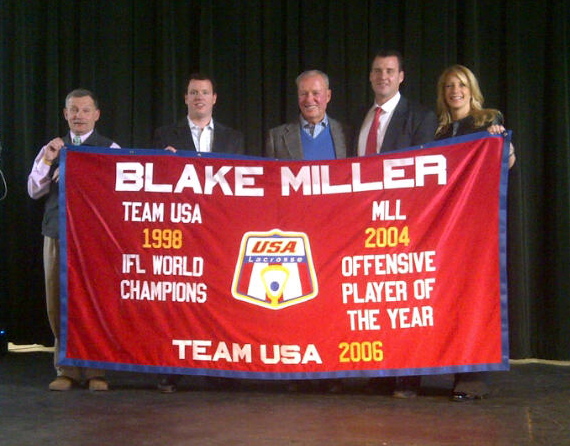
Twenty years ago I watched a student graduate who'd come to school as a freshman completely disinterested in anything academic. Actually, he was disinterested in anything, period. Except maybe lacrosse. But even his fervent passion and extraordinary skills in that sport were no match for the malaise that governed his every day. Somewhere between that first year and his last, he grew to at least be responsive to the gifts of time, encouragement, knowledge, and compassion that his teachers and coaches shared so readily with him.

Today, I sat in the audience and listened to this same former student share his story with current students at his alma mater. I was a guest, and a surprise guest at that. I wasn't sure what to expect, but I knew that my pride would carry me through the experience. And while he spoke - of his struggles, of his growth, and of his deep appreciation for what we teachers had done for him - I knew this would become a moment that I would replay in my mind for a good long while. He was gracious and understanding, inclusive and grateful. He noted that he'd been a "handful" and then he thanked, by name, several of us who'd been there through it all. What a joy to hear it. What a joy.

Moments like today's carry us through the weeks and months we may go without a moment like today's. I have been lucky to have many such moments in my career - former students who write to say they've become teachers because I have inspired them, parents whose end-of-year appreciative comments and emails recognize my influence in their child's growth, administrators who praise my work in conversations and evaluations, colleagues who recognize the time and energy I dedicate to them as their union president.

This week I scored in every category. It was a very good week. And since it might have to suffice for a while, I'm going to relish it. I might even take Monday off.